
We’ve been asking our Associates to share their best work mistakes for an ongoing series on our LinkedIn page. It’s been wonderful to see so many insightful stories coming from initial moments of “oops”!
Today we’re sharing this wonderful reflection from Amelia Wakeford. It’s a great example of how a small, human mistake can open up something much bigger – shifting relationships and reshaping how people work together.

The Best Mistake I Ever Made at work…
… happened when I had a job supporting academics to develop research proposals for funding.
I was helping someone prepare a complex, multi-million-pound application to an extremely competitive funding stream. The project could not have been more loaded with tricky things to navigate, trying to trip us up at every turn, so the odds were stacked against us.
Under the pressure of the deadline, I made a mistake in the budget. I left a zero off the cost of an item – a typo that mattered. Big oops. Not catastrophic, but definitely not OK.
So, of course, the project won the funding. And I had a mistake to own.
Academic culture centres on excellence, so “I was a human working under pressure” wasn’t going to cut it. I drafted an email apologising and suggesting a meeting to discuss options. I hit send and held my breath.
A reply came within minutes:
“Amelia – without you I never would have got the bloomin’ grant! Don’t worry – we’ll make it work.”
That response ran counter to the prevailing culture at the time. It marked the start of a friendship and partnership – one where responsibility, credit and mistakes were shared.
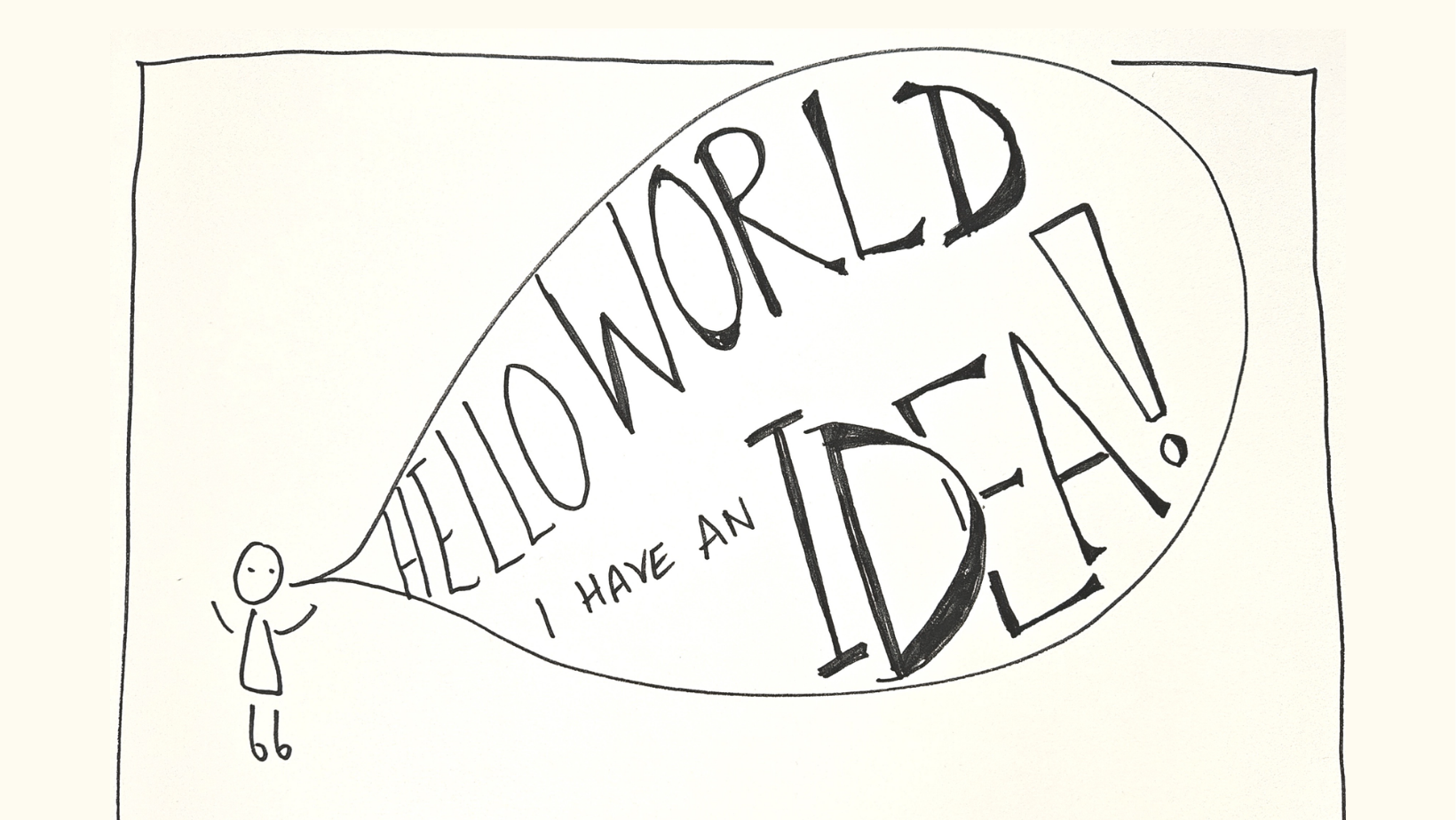
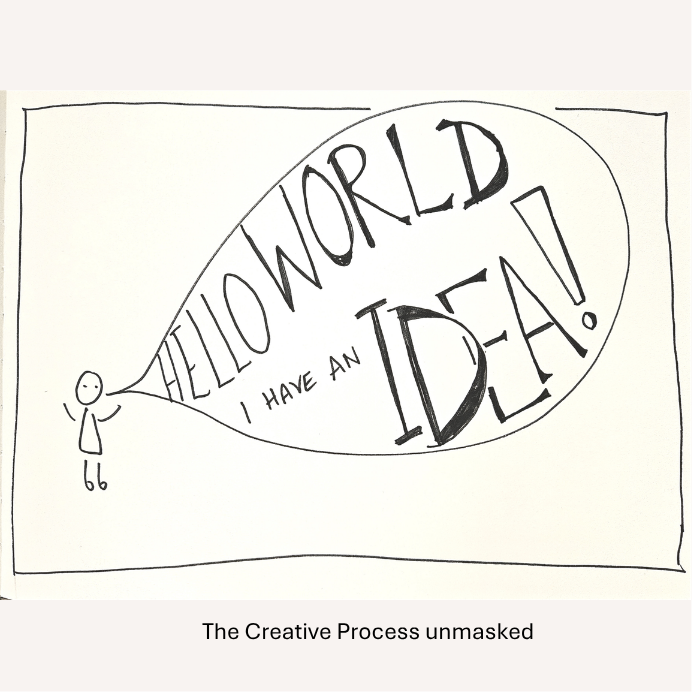
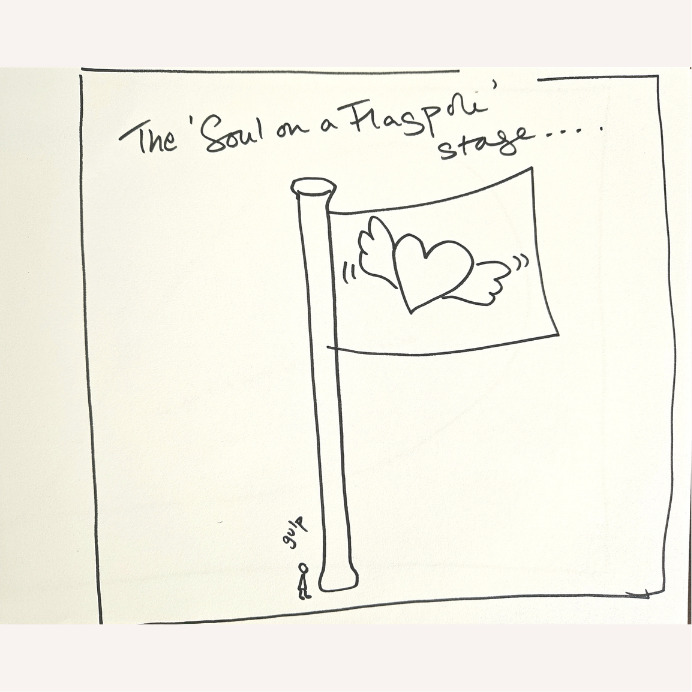
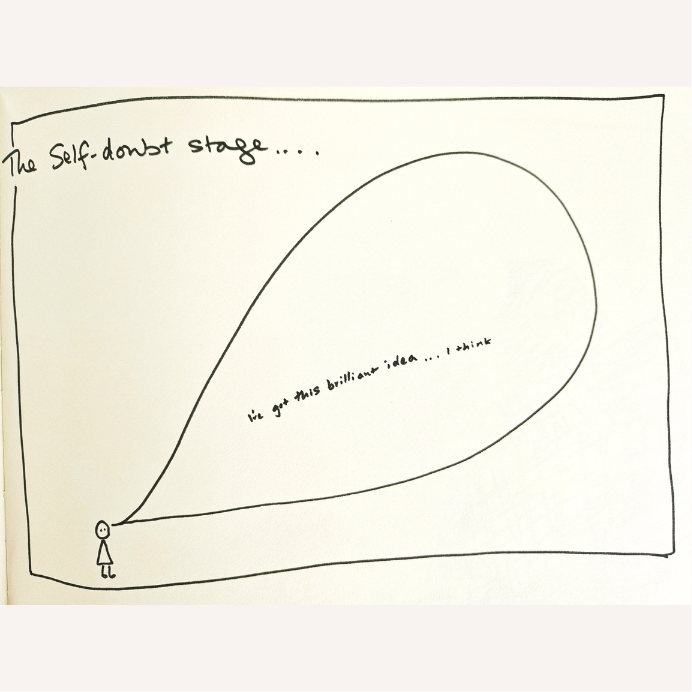
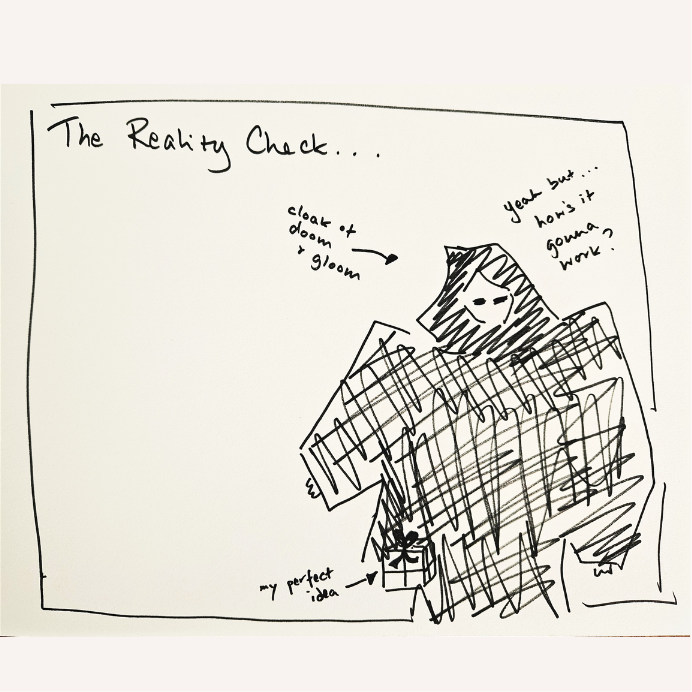
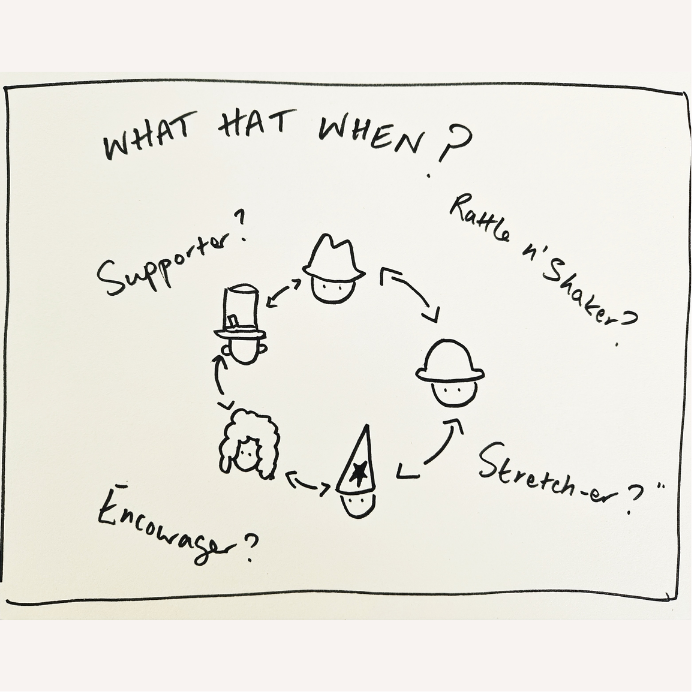
Soon after, we were invited to give a presentation entitled How to Win a Large Grant. I kick-started my thinking by jotting down a few cartoony-thoughts to remind me of our journey: the ups and downs, the uncertainty and risk, the people who had helped shape the idea along the way.
When I shared my sketches with my lovely collaborator, they said:
“Great, there’s our presentation! Done!”
No PowerPoint. No bullet points. No perfectly-tuned advice. Just a story of the human side of our creative process told through stick-people (ad)venturing forth and pulling away from the shore together.
Those drawings surfaced the role of the emotional and relational work that sits at the heart of creativity and collaboration. They struck a chord that changed my direction. My interest in how creativity and collaboration work together was sparked and now I get to explore it every day through my facilitation work.
Even projects labelled as “solo” are never done alone. We need people who sense, often from gut and heart rather than head, what is needed in service of a project. We need people who make space for vulnerability, honesty and compassion, people who understand intuitively when to steady an idea and when to help it stretch.
That missing zero was a mistake that I’m deeply grateful for. For me personally, it started my journey into facilitating creative collaboration. And for the institution? I suspect that it acted as a tiny catalyst for a ripple of culture change – encouraging others to pay closer attention to the relational and emotional aspects of research.
Over time, I’m pretty sure that approach helped us to win more zeros and to make more good stuff happen.
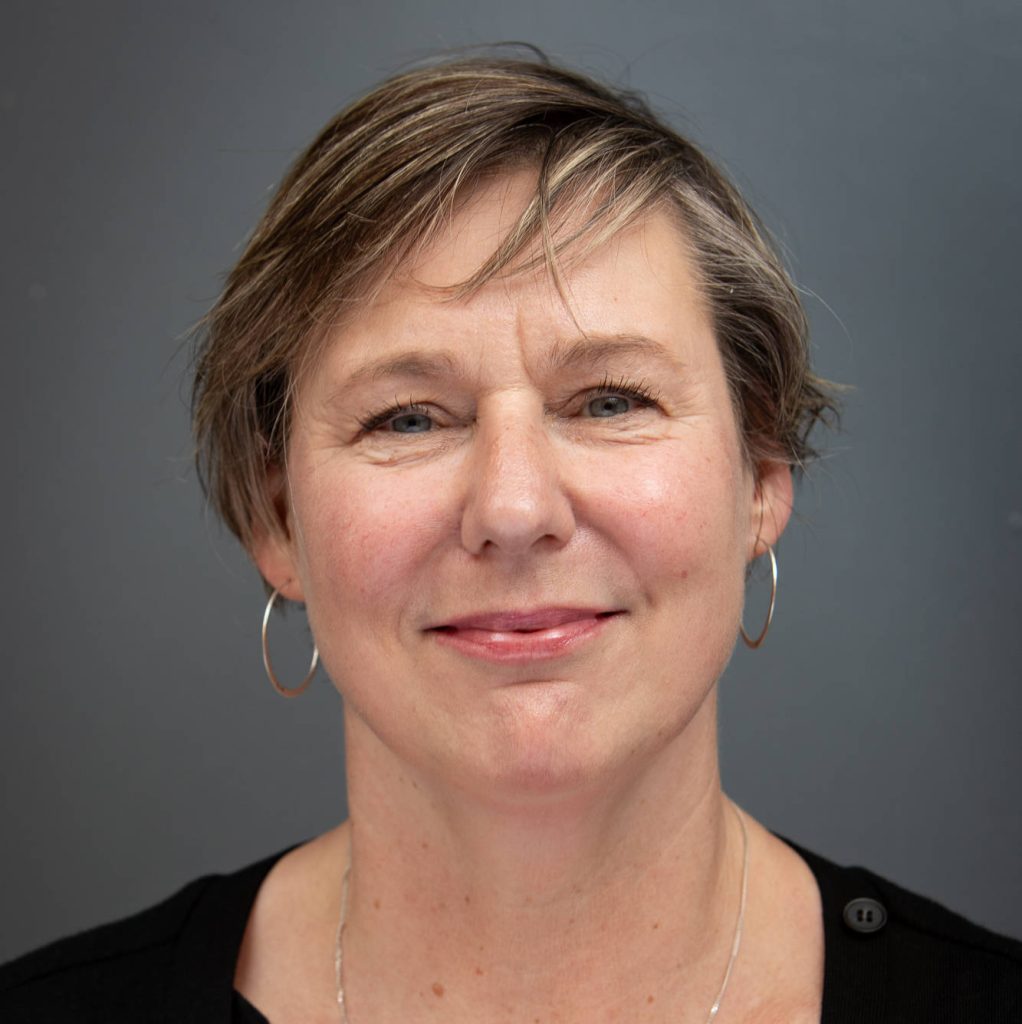
Amelia Wakeford is a professionally accredited facilitator, who uses creative approaches to support collaboration. She has a creative practice background which she combines with her experience of working in research development where she facilitates collaborations – across disciplines, across sectors, between organisations and communities.
She is committed to collaboration as a tool for transformation – when done well it should challenge us, if we want to draw on diverse perspectives and do things differently. She takes a playful and appreciative approach to dialogue, designing workshops that support groups to find shared purpose and bring about change.


